
A home propane tank is a steel tank that sits outside your house and holds the fuel for your furnace, water heater, range and anything else that runs on propane. Ozark Mountain Propane rents and sells tanks from 150 to 1,000 gallons, above ground or underground. This guide covers how a tank works, how to pick one and how to look after it.
It is written for anyone in Northwest, Central or Southeast Arkansas who is moving into a home with a tank, thinking about adding one, or just wants to know what that big shape in the yard is doing. Read it top to bottom, or jump to the part you need.
- What a home propane tank is and how it works
- Renting a tank or buying one
- Which size you need
- Above ground or underground
- How a tank gets set at your home
- How to tell how much propane is left
- How delivery works
- Getting ready for winter
- Whether a tank is safe
- Which setup fits your home
- Frequently asked questions
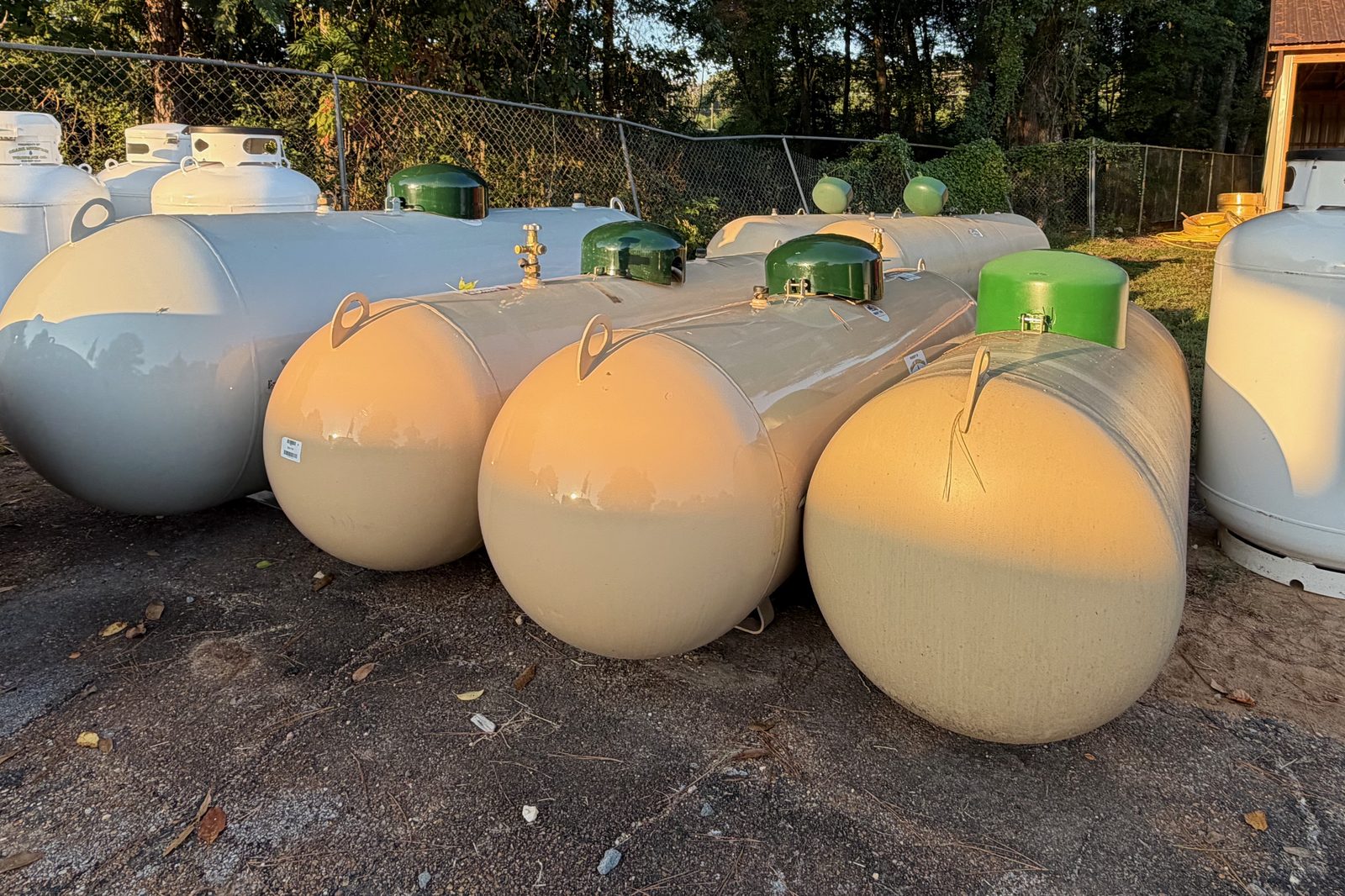
What is a home propane tank and how does it work?
A home propane tank stores propane as a liquid under pressure and lets it out as a gas when something in the house calls for it. Nothing in it is pumped. The pressure does the work.
Liquid inside, gas out
Propane turns to liquid when it is stored under pressure, and that lets a lot of fuel fit in a small space. When you light the stove or the furnace kicks on, the liquid in the tank boils off into gas. The gas passes through a regulator, which lowers the pressure to something your appliances can use, and then travels to the house through the yard line.
The parts you can see
Most tanks have a dome, the round lid on top that protects the fittings. Under it you will find the gauge, the fill valve and the regulator.
The gauge tells you how much propane is left. The fill valve is where our driver connects the hose. The regulator steps the pressure down before the gas reaches your house. You do not need to touch any of them to use your tank, but it helps to know where they are.
Why a tank is never filled to the top
A full tank is filled to about 80 percent, never 100. Liquid propane expands when it warms, and the empty space above the liquid gives it somewhere to go. A tank filled to the brim on a cool morning would be over full by afternoon.
So if your gauge reads 80 after a delivery, that is a full tank, not a short fill. The US Energy Information Administration has a plain explanation of propane and the other fuels in its family.
Should you rent a propane tank or buy one?
You can do either, and we sell and rent tanks. The right answer depends on how long you plan to stay and how you feel about owning equipment.
Buying a tank
Buying suits a home you plan to stay in. The tank is yours, and so is the job of looking after it.
Renting a tank
With a rented tank, the tank stays ours. We set it and we fill it. Ask what else comes with the rental before you decide, from us or from anyone.
Questions to ask before you choose
Any propane company should answer these in plain words:
- Who owns the tank?
- Who looks after it, and who pays if it needs work?
- Who is allowed to fill it?
- What happens to the tank if you move?
Call us and we will go through all four for your home.
What size propane tank do you need?
Tanks for homes run from 150 to 1,000 gallons. What you run on propane sets the size, and so does what you plan to add later.
What sets the size
A house that only cooks and heats water on propane needs a smaller tank than one that heats the whole place through a January cold snap. Add a dryer, a fireplace or a standby generator and the tank has to be able to feed all of it.
Why we come and look
We go over the list of appliances and pick the size from that. A guess over the phone is how a home ends up with a tank that runs low halfway through winter.
The full walk through is in our post on what size propane tank you need.
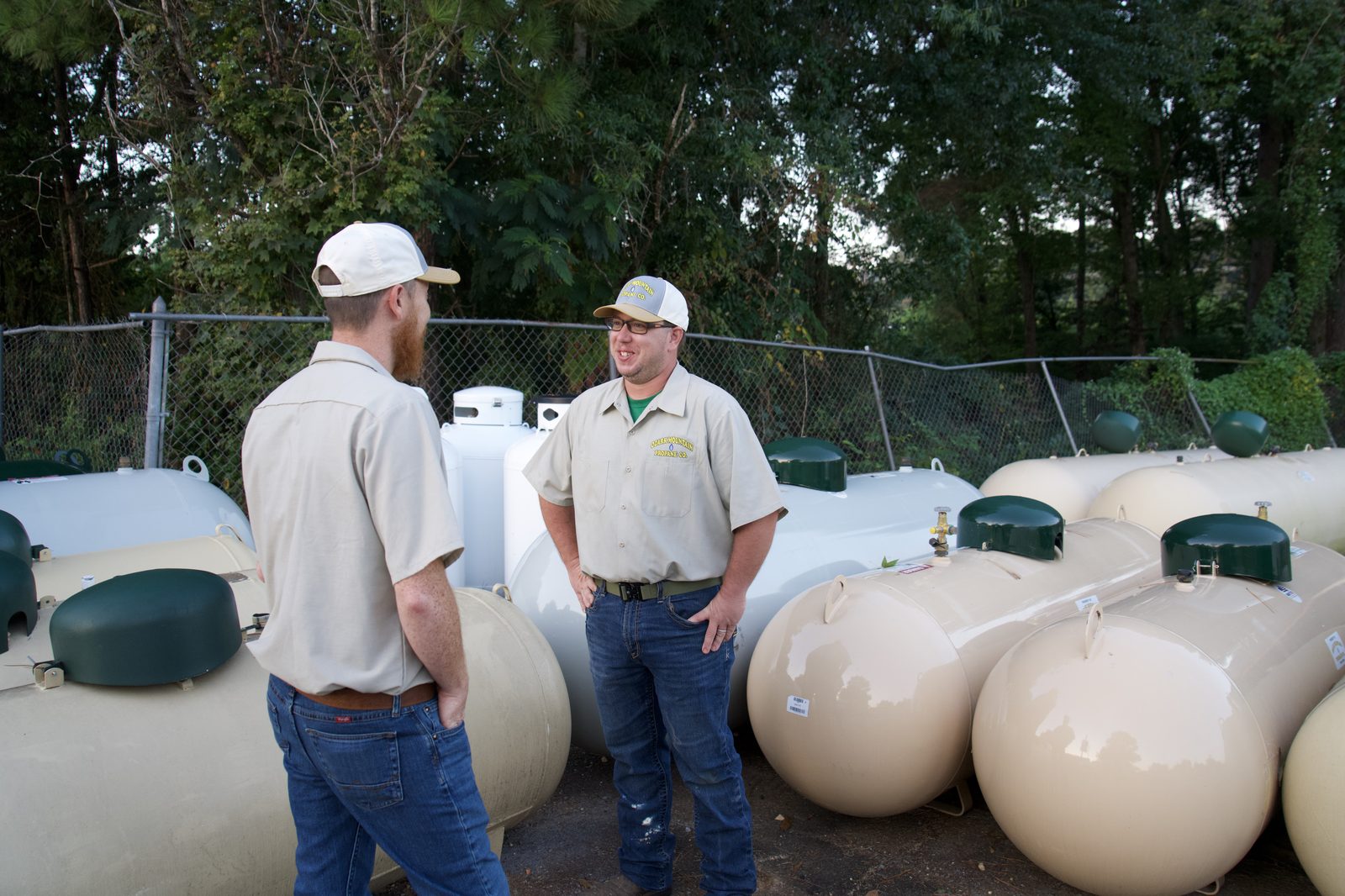
Should your tank go above ground or underground?
Above ground and underground tanks work the same way. The difference is what you see in your yard and how the tank is set. Above ground tanks run 150 to 1,000 gallons. Underground tanks come in 500 and 1,000 gallons.
Above ground
An above ground tank sits on a pad in the yard. It is easy to see, easy to reach and easy to read. The tradeoff is that you can see it. On a big lot it can sit well back from the house. In a small yard, it is the first thing you see out the kitchen window.
Underground
An underground tank is buried, so only the dome shows above the grass. The yard stays open and the view stays clear. You read the gauge the same way, by lifting the dome.
We lay out the tradeoffs side by side in above ground vs underground propane tanks.
How does a tank get set at your home?
Setting a tank is more than putting it down in the yard. It has to sit where the truck can reach it, where the line to the house is short and where the codes allow it.
We come out and look
We walk the yard and pick a spot that works for the house, the gas line and the delivery truck. Then we tell you the size, 150 to 1,000 gallons, above ground or buried.
Fire codes set how far a tank has to sit from the house, the property line and anything that can spark. That is one reason we look at the yard before we promise a spot.
The tank, the yard line and the piping
We set the tank, run the yard line and the piping to the house, and fill it before we leave. Before we go, we show you the gauge and the shutoff.
If you have a standby generator
The same crew connects a standby generator when you have one, so there is one crew and one number to call. More on that is on our generators page.
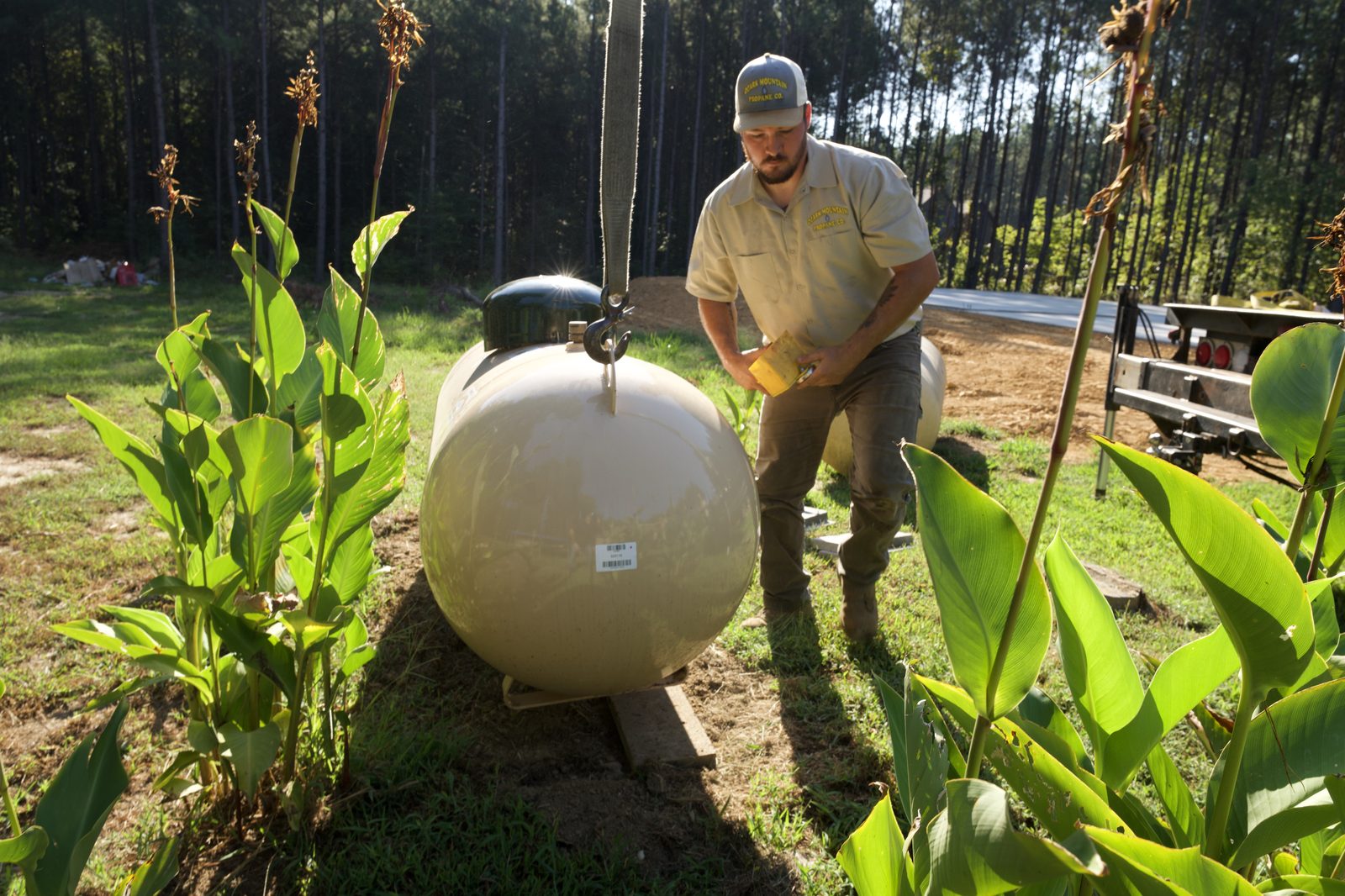
How do you know how much propane is in your tank?
Lift the dome and look at the gauge. It reads as a percentage of the tank, not in gallons, so a 40 on the dial means the tank is 40 percent full.
When to call us
Do not wait for the gauge to get near empty. A good habit is to call when it reads about 30 percent. The first cold week of the year gets busy, because everyone in Arkansas looks at the gauge the same morning, and a call at 30 puts you ahead of that rush.
Why a small tank needs more watching
Thirty percent of a small tank is a lot less fuel than thirty percent of a big one. If you have a small tank and a house that heats with propane, check the gauge more often.
Step by step instructions are in how to read a propane tank gauge.
How does propane delivery work for a tank?
You call us or schedule online, and a truck comes from the office nearest you. We have five offices, in Garfield, Conway, Little Rock, Pine Bluff and Sheridan, and one toll free number that reaches a person.
What the driver does
The driver pulls the hose to your tank, fills it and checks the gauge before leaving. If we are running late, we call you.
What helps the driver
Leave the gate unlocked or give us the code. Tell us about the dog. Keep the path to the tank clear. None of it takes long, and it keeps a short stop from turning into a return trip.
Do you have to be home?
No. The driver needs a truck and a hose at the tank. If something stops the truck, we call you rather than leaving you to find out from an empty tank.
The rest is on our propane delivery page.
How do you get a propane tank ready for winter?
Check the gauge, keep a path to the tank, keep snow and ice off the fittings and call for a fill before the cold sets in.
Check the level now
Look at the gauge before the first hard freeze, not after it. A tank that reads about 30 percent or less is ready for a call.
Keep the tank and the path clear
The truck cannot fill a tank it cannot reach. Clear snow from the path and the dome by hand or with a broom, and do not chip at ice around the fittings.
Plan for storms
A standby generator burns propane while the power is out, so a fuller tank before a storm matters more. Our checklist is in how to get your propane tank ready for winter.
Is a propane tank safe?
Yes, when it is set right and left alone. Propane has no smell of its own, so a smell is added to it. It is sharp and sour, like rotten eggs.
If you ever smell gas
Leave right away and take everyone with you, pets included. Do not touch a light switch, a phone or an appliance on the way out. Once you are outside and away from the house, call 911. Then call us so we can send someone to check the system. The full list is on our propane safety page.
What not to do
Do not try to repair a tank, a regulator or a gas line yourself. That is a job for a trained technician.
Keep the area around the tank clear
Keep brush, trash and stored items away from the tank. If you cannot get to it easily, neither can we.
Which tank setup fits your home?
Find the row that sounds like your place.
| Your situation | What to look at | Why |
|---|---|---|
| Cooking and hot water only | The smaller end of 150 to 1,000 gallons | Light, steady use gives the tank less to feed |
| Heating the whole house | The larger end, above ground or underground | Heat is the biggest draw, and the tank has to last through a cold stretch |
| Standby generator plus heat | Talk to us before you pick a size | A generator adds a heavy draw on top of everything else |
| You want a clear view of the yard | Underground, 500 or 1,000 gallons | Only the dome shows above the grass |
| You plan to stay for years | Ask about buying | Buying suits a home you plan to stay in |
| You are building a new house | Talk to us before the gas line goes in | The tank spot has to be settled before the yard line is run |
If none of those sounds like your place, call us and describe it. It is a short conversation, not a sales pitch.
Frequently asked questions
How full does a propane tank get?
About 80 percent. Liquid propane expands when it warms, and the empty space above the liquid gives it room to do that. A gauge that reads 80 after a delivery means the tank is full.
Do I need to be home for a propane delivery?
No. The driver needs a truck and a hose at the tank, so leave the gate unlocked or give us the code, and tell us about the dog. If something stops the truck, we call you.
Where in Arkansas do you deliver?
We deliver across Northwest, Central and Southeast Arkansas from five offices. Our service area page lists every town. If yours is not there, call anyway and we will tell you straight.
Can a propane tank run a standby generator?
Yes. Heat, hot water, the cooktop, the grill, the camper and a standby generator can all run off the tank we fill. Tell us what you plan to run so we can size the tank for all of it.
What does the gauge on a propane tank read?
A percentage of the tank, not gallons. A reading of 40 means the tank is 40 percent full.
What should I do if I smell gas?
Leave right away with everyone in the house, do not touch a switch or appliance, call 911 from outside, and then call us.
Ozark Mountain Propane has been in Garfield since 1994 and runs five offices across Arkansas. Tell us what runs on propane at your place and we will tell you which tank fits.
Ozark Mountain Propane14770 East Hwy 62, Garfield, AR 72732
(479) 451-1093