
Choose an above ground tank if you want one that is easy to see, reach and read. Choose an underground tank if you want the yard clear and only a dome showing. Both work the same way, and Ozark Mountain Propane sets both. Above ground comes in 150 to 1,000 gallons, underground in 500 and 1,000.
This is one part of our complete guide to propane tanks. Here is how the two compare.
| Above ground | Underground | |
|---|---|---|
| Sizes | 150 to 1,000 gallons | 500 and 1,000 gallons |
| What you see | The whole tank on a pad | The dome only |
| Reading the gauge | Lift the dome | Lift the dome |
| Setting it | A pad, then the yard line | A hole, the tank buried, then the yard line |
| Yard space | The tank takes room above the grass | The yard stays open |
| Digging | Little | Yes, and call 811 first |
| Cost | Depends on the size and your yard | Depends on the size and your yard |
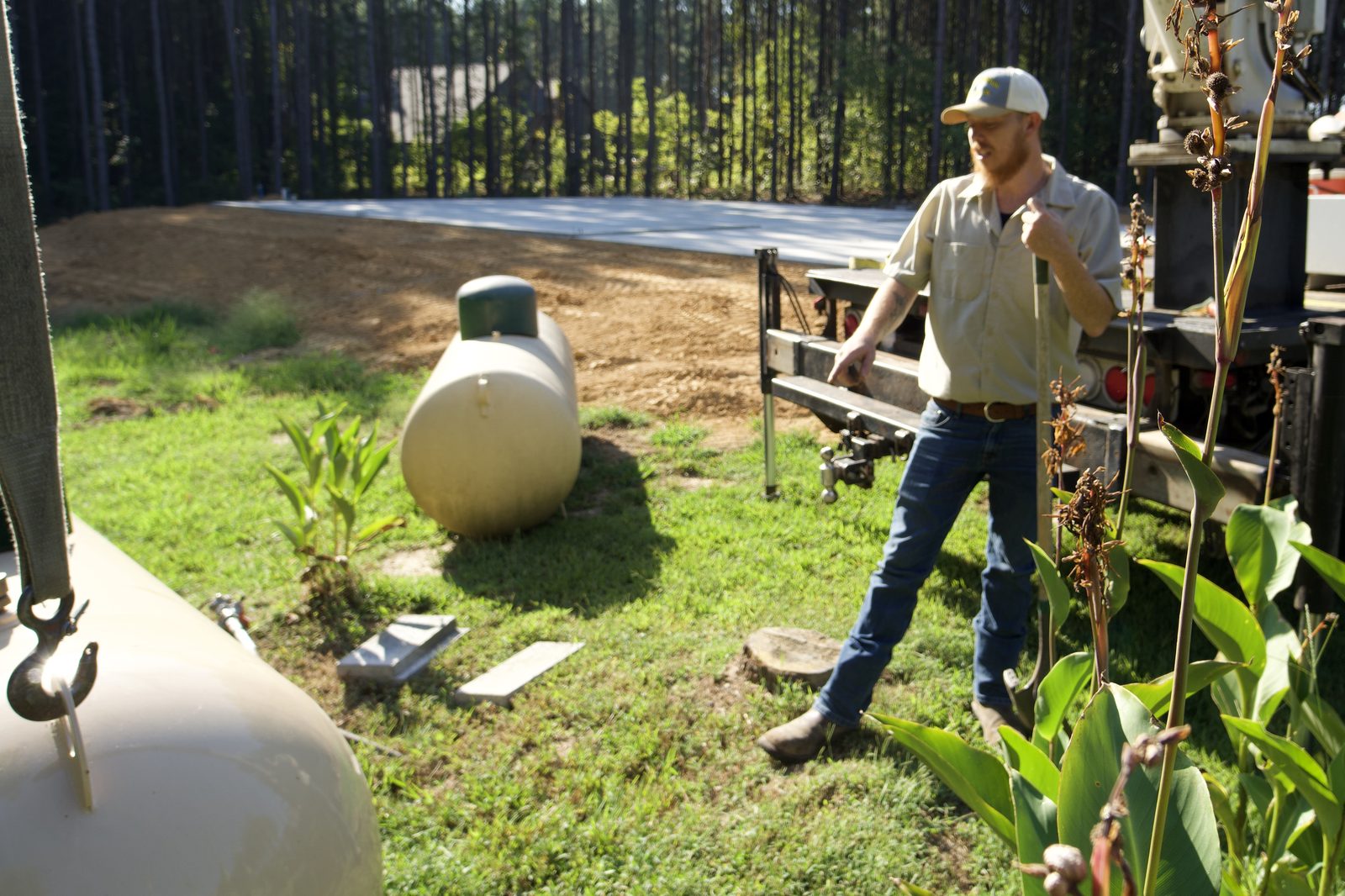
How do the sizes compare?
Above ground tanks start smaller and go bigger. Underground starts at 500 gallons.
If you need a small tank
A home that only cooks and heats water on propane may fit a tank at the small end of our range. That is an above ground tank, because underground does not start that low.
If you need a big tank
Heating a whole house, or running a standby generator on top of heat, points to the large end. Either type reaches 1,000 gallons, so size does not force the choice. Our post on what size tank you need covers how to pick.
How do they look in your yard?
Looks decide this choice for most people. One tank is a big shape in the yard and the other is a lid in the grass, and that difference is easy to picture.
An above ground tank is visible
An above ground tank sits on a pad, painted and out in the open. On a big lot it can sit well back from the house and behind a few trees. In a small yard, you will see it from the kitchen window.
An underground tank is not
Only the dome shows above the grass. If you would rather not look at a tank, we bury one, and the lawn goes on as if it were not there.
How does setting each one work?
Setting either type starts the same way. We walk the yard and pick a spot that works for the house, the gas line and the delivery truck.
Setting an above ground tank
We set the tank on its pad, run the yard line and the piping to the house, and fill it before we leave.
Setting an underground tank
An underground tank needs a hole first, so there is digging, and digging means calling 811 before anyone breaks ground. That free call (see call811.com) gets buried lines marked so nobody hits a water, power or gas line. After the tank goes in, we run the yard line and piping and fill it.
How do you reach and read each one?
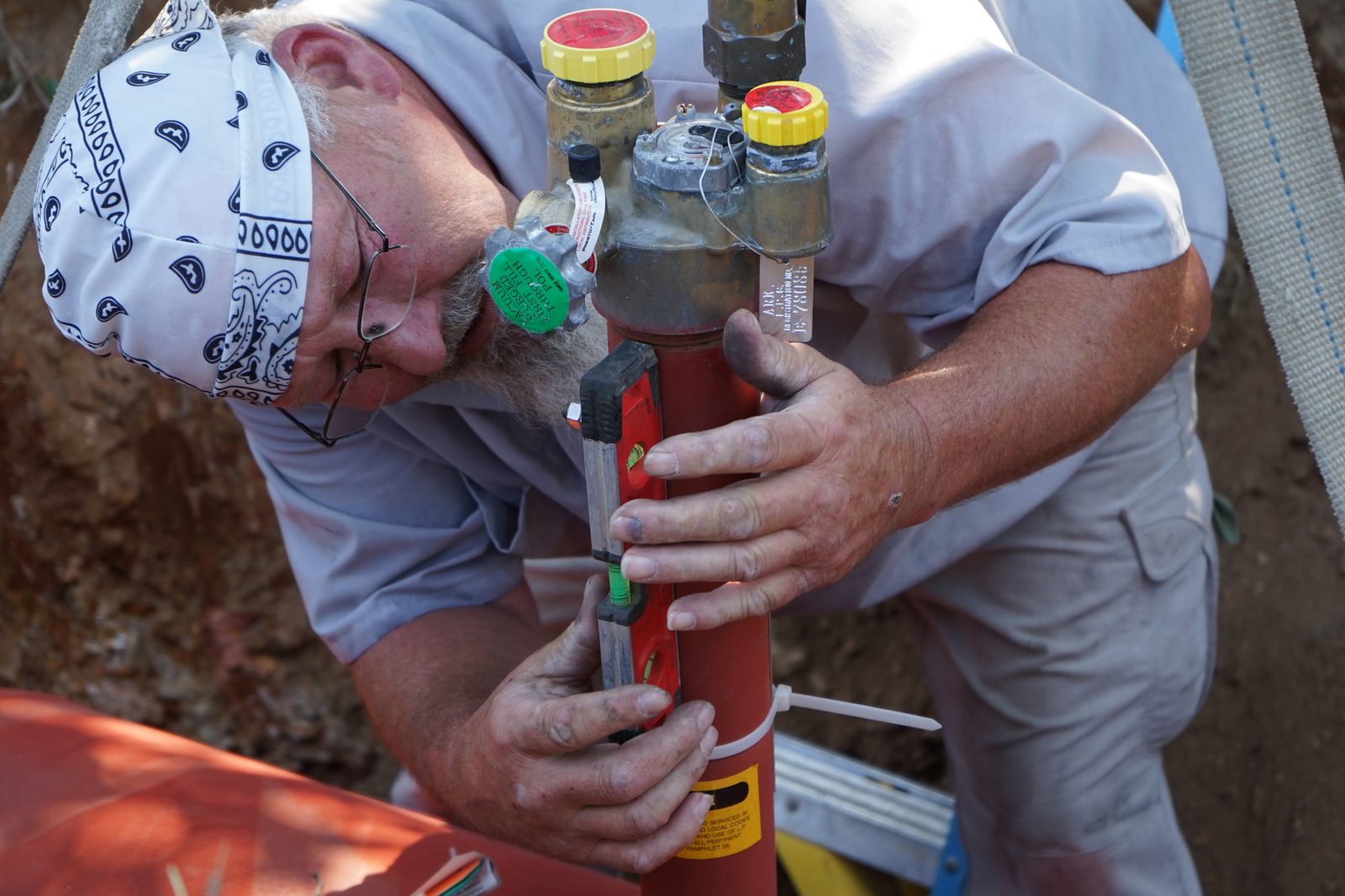
The same way. On both, the gauge sits under the dome, and you lift the dome and look at the dial.
Reading the dial
Lift the dome, look at the dial and read the number. It is a percent of the tank, not gallons.
Keeping the dome findable
On an underground tank the dome is the only thing above the ground, so it is easy to lose in tall grass or snow. Keep it mowed and clear. Our guide to reading a propane tank gauge has the steps.
How do you look after each one?
Above ground
You can see the whole tank, so you can see when something looks off: a patch of rust, a dent, a cover that does not sit right. If you do, call us instead of fixing it yourself.
Underground
You cannot see most of it, so ask any propane company how a buried tank is protected and checked. We are glad to go through it with you.
What does the ground in your yard change?
A national website cannot tell you this part. Arkansas ground is not the same everywhere, and the ground decides how hard an underground tank is to set.
Rocky ground
In the hills of Northwest Arkansas, rock can sit close to the surface. Digging a hole in rock takes more work, and that can tip a yard toward an above ground tank.
Wet ground
Low spots that stay wet are a different problem. A buried tank in wet ground has to be set so that it stays put. That is one more reason we walk the yard before we tell you which type fits.
What does the truck need to reach?
Every fill starts with a driver pulling a hose from the truck to the tank. Where the tank sits decides how easy that is, whichever type you choose.
A long or steep drive
A tank at the far end of a long drive or down a steep slope is harder to reach than one near the road. If your lot is hilly, say so when you call and tell us where you would like the tank. We would rather hear it before the truck is in the driveway.
Where the fill point sits
On both types the fill valve sits under the dome. For an underground tank that means the dome is the only place the driver can connect, so it has to stay clear all year.
What should you tell us before we come out?
A short list saves a second trip, and it matters more for an underground tank.
Buried things you know about
Tell us where the septic tank, the well, the drain lines and any buried power or water lines sit. Those decide where a hole can go. The 811 call still happens, but your own knowledge of the yard is the first map.
What you plan to add
A pool heater, a workshop or a generator you want in a few years changes the size, and the size changes the choice. Mention it now.
How can you test your own yard?
Before anyone calls, walk the yard and ask three questions. They will tell you which way you lean.
Would you mind seeing the tank?
If the answer is no, an above ground tank behind a few trees may be fine. If the answer is yes, underground is worth a closer look.
Is there room for a truck and a hose?
Stand where the tank would go and picture the truck pulling in. If the picture is awkward, tell us. We would rather solve it on paper than in the driveway.
Who should choose an above ground tank?
You want the simplest set
A pad and a tank is the simpler job, and it works well where rock sits close to the surface.
You want the full range of sizes
Above ground covers 150 to 1,000 gallons, so it fits the smallest homes and the biggest.
Who should choose an underground tank?
You want the yard open
Underground keeps the view clear and the lawn whole, with only the dome showing.
Your lot can take a hole
The ground has to allow digging for a 500 or 1,000 gallon tank. That is what the walk through the yard settles.
Ozark Mountain Propane sets above ground and underground tanks across Arkansas from five offices. Tell us about your yard and we will tell you which one fits.
Ozark Mountain Propane14770 East Hwy 62, Garfield, AR 72732
(479) 451-1093